01 — Overview
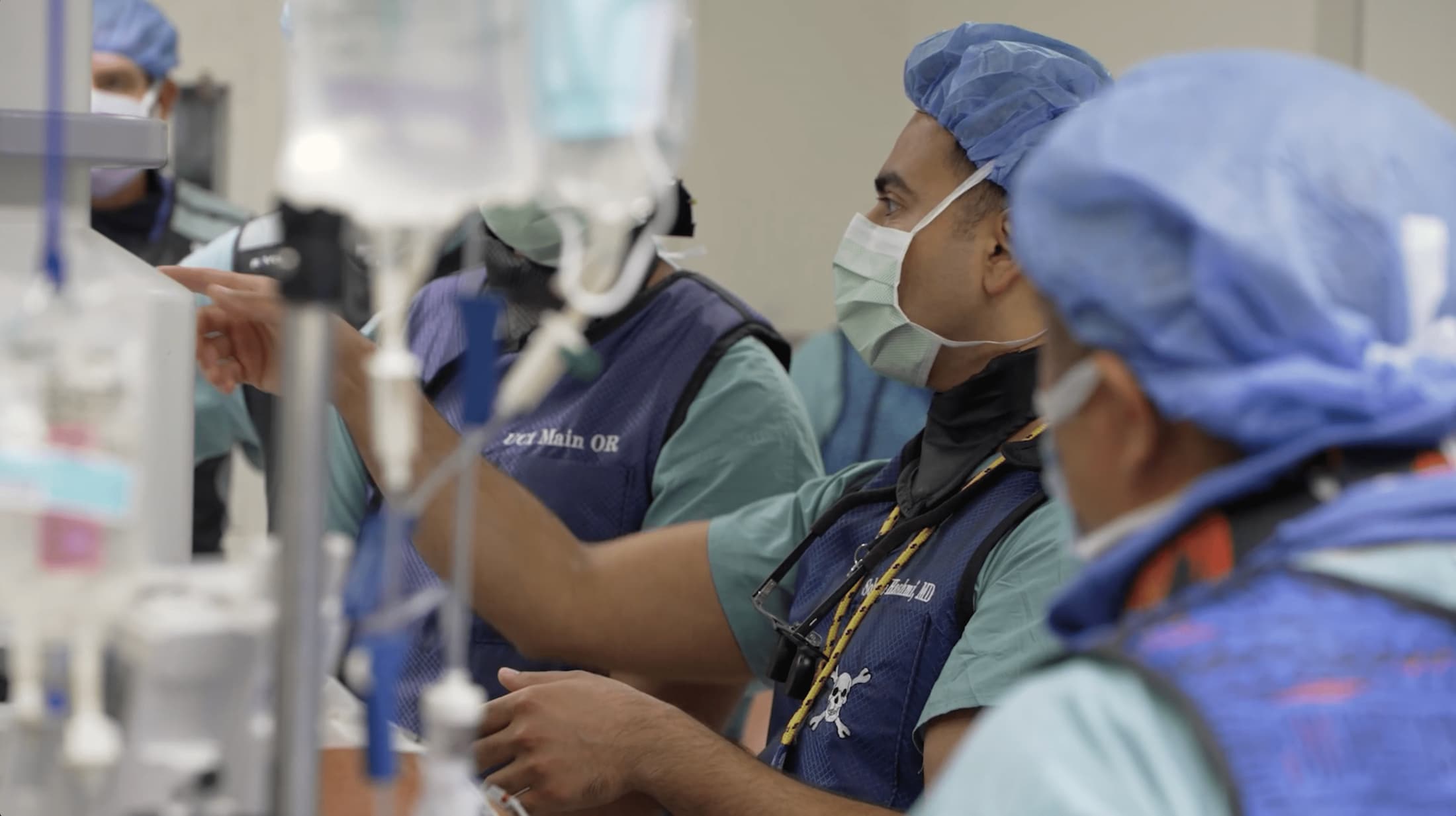
Trauma surgery is time-sensitive and the spine is rarely the only injury. Dual fellowship training in orthopaedic trauma and in spine surgery means the spinal injury is treated in the context of the whole patient, alongside the trauma, critical care and rehabilitation teams. Dr. Hashmi is Director of Spine Trauma at UCI Health.
02 — Who it suits
- Unstable fractures and fracture-dislocations
- Spinal cord or nerve root compression after injury
- Fractures through a rigid spine in ankylosing spondylitis or DISH
- Osteoporotic fractures with progressive collapse or deformity
03 — How it is done
Percutaneous screws and rods can stabilize many injuries without a large open exposure. Where the spinal cord is compressed, decompression is performed at the same sitting. Anterior reconstruction is added where the vertebral body has been destroyed.
04 — Recovery
Recovery is determined by the injury and by any neurological deficit rather than by the operation alone. Bracing is used where it adds control, and rehabilitation begins in hospital.
05 — Conditions treated
Timelines and techniques described here are general. Your own plan depends on your anatomy, your imaging and your medical history, and is decided with you at consultation.