01 — What it is
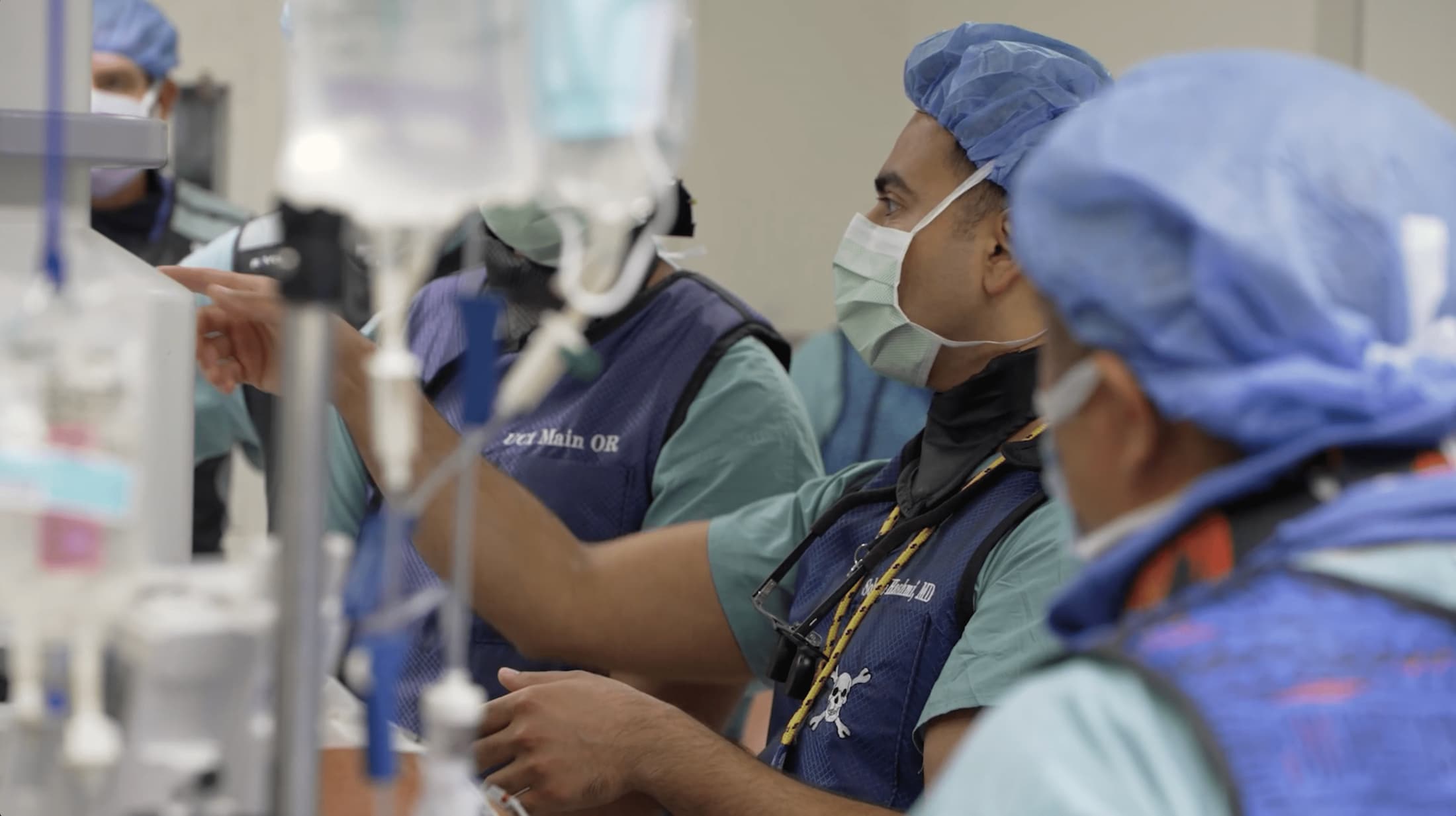
Dual fellowship training in both orthopaedic trauma and spine surgery is directly relevant here. Injured patients often have more than one injury, and decisions about when to stabilize the spine, and in what order relative to other injuries, are made together with the trauma, critical care and neurosurgical teams rather than in isolation.
02 — Symptoms
- Severe pain after a fall, collision or crush injury
- Numbness, weakness or paralysis below the level of injury
- Visible deformity or a palpable step in the spine
- Sudden height loss and mid-back pain in osteoporotic fracture
03 — Causes
- Motor vehicle collisions and other high-energy trauma
- Falls, including low falls in older adults
- Osteoporotic compression fracture
- Ankylosing spondylitis or DISH, where a rigid spine fractures with lesser force
04 — How it is diagnosed
CT of the spine, since injuries at a second, non-adjacent level are not uncommon. MRI assesses the ligaments, the disc and the spinal cord. Established classification systems guide whether an injury can be managed in a brace.
05 — Treatment approach
Stable injuries may be braced and followed. Unstable injuries, and injuries with a neurological deficit, are generally stabilized, with decompression where the spinal cord or nerve roots are compressed. Timing is coordinated with the rest of the patient rather than treated in isolation.
General information only. Your own diagnosis and plan depend on your examination and imaging. Nothing here replaces a consultation.